Last updated November 20, 2026
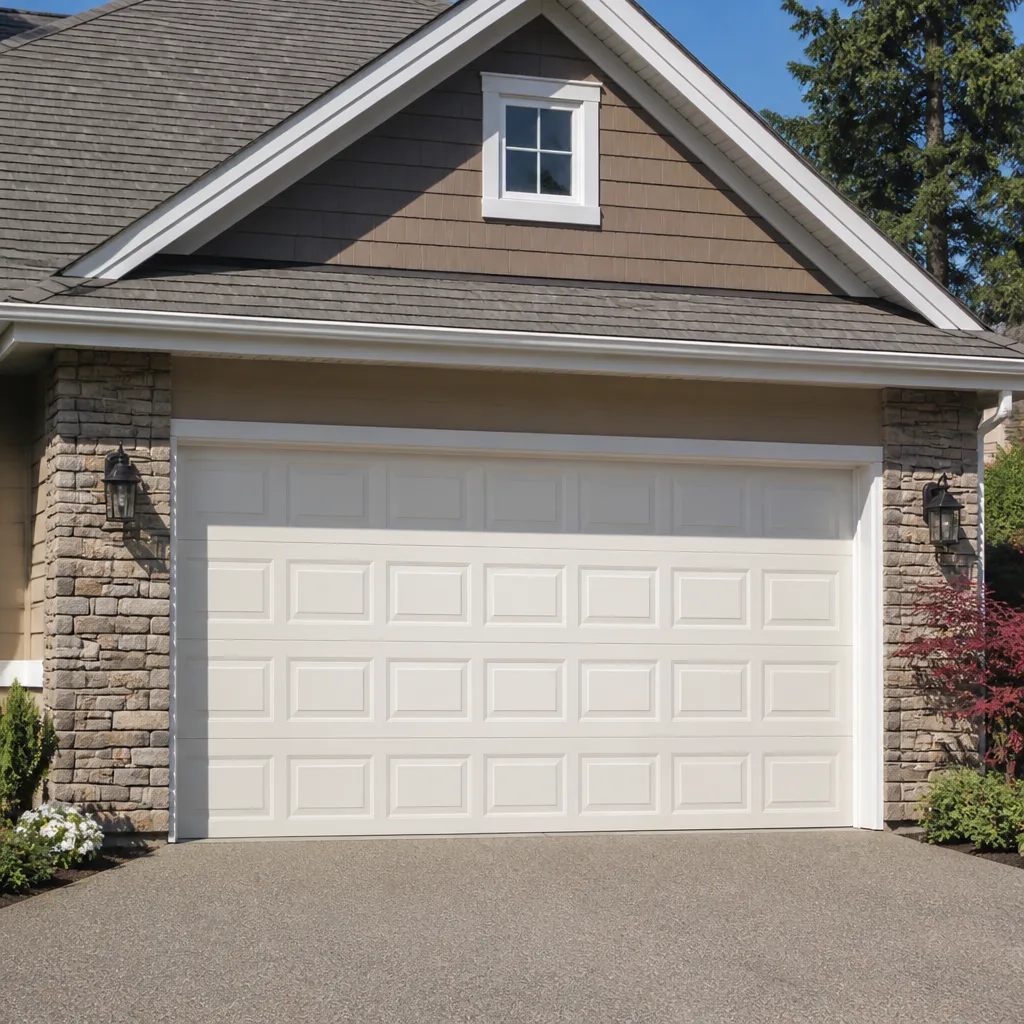 Raised-panel steel
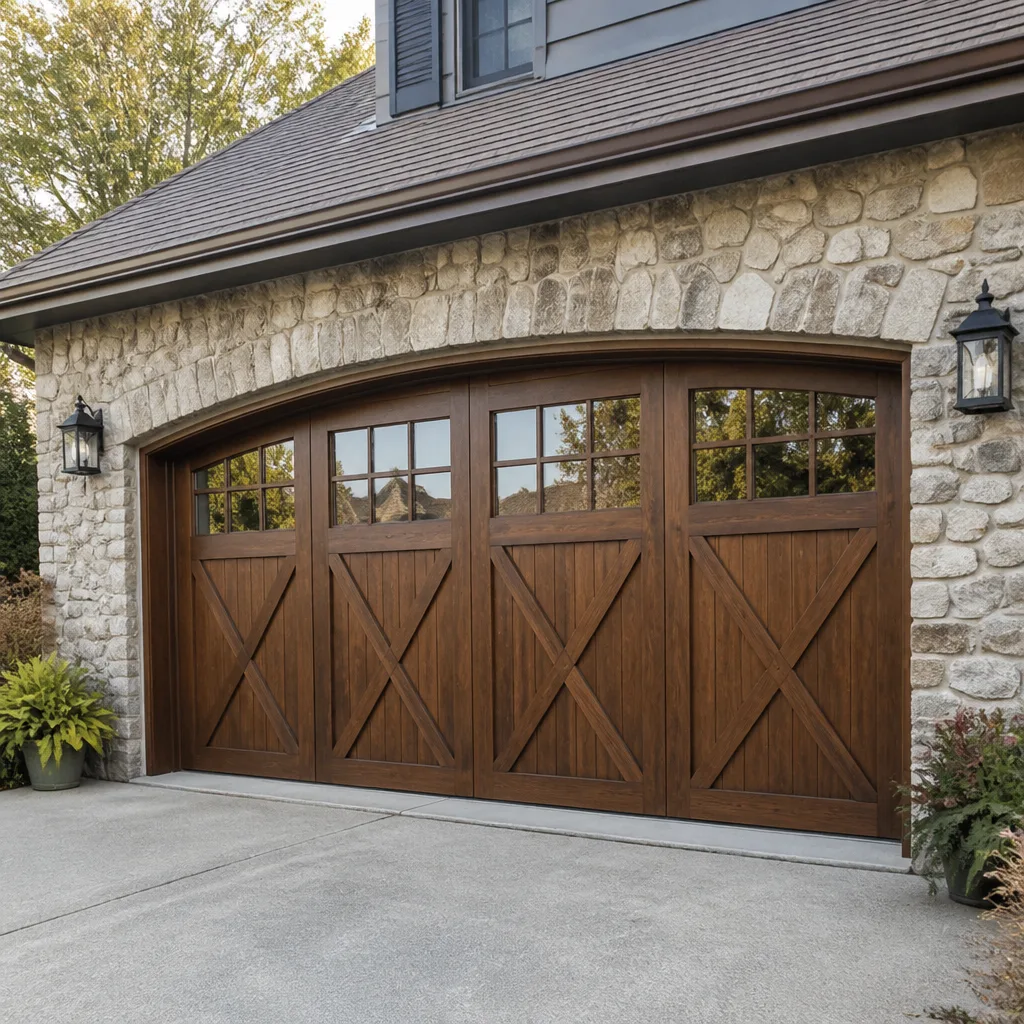 Carriage house
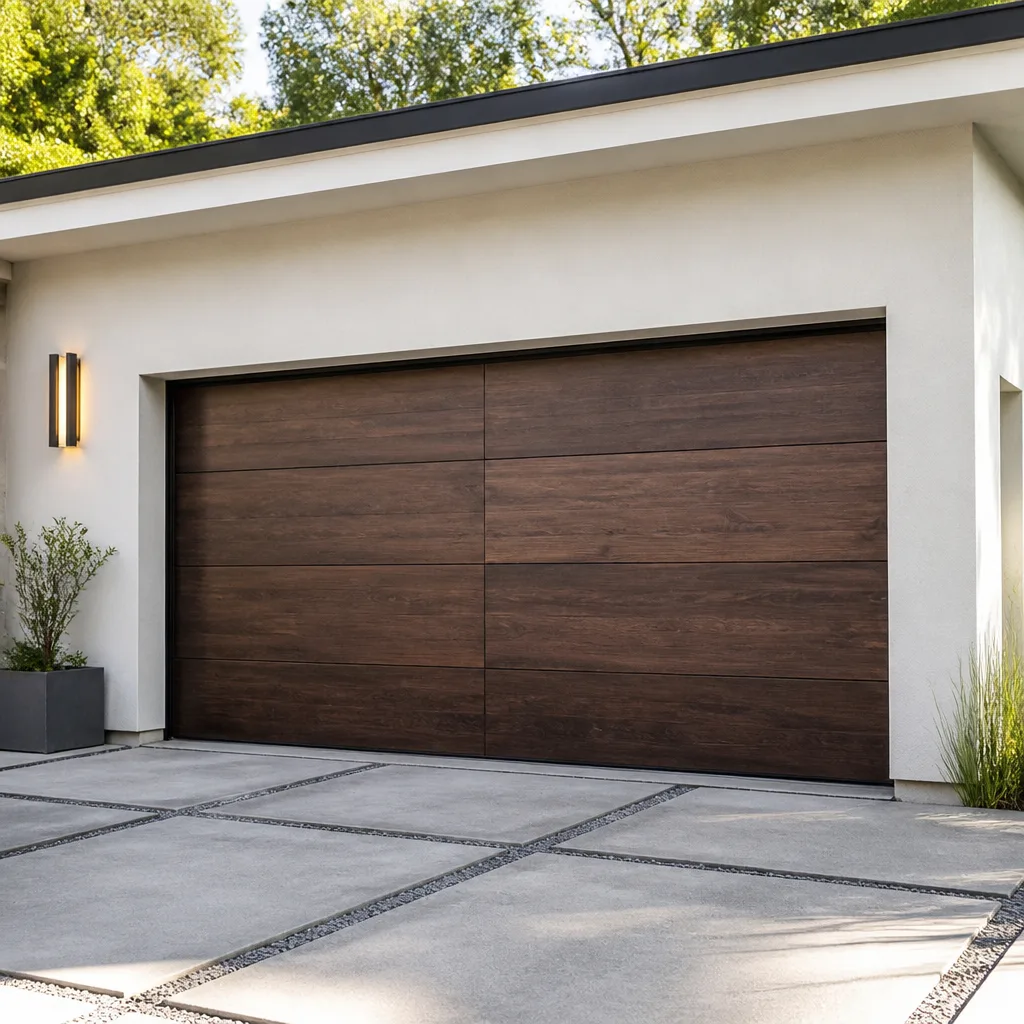 Modern flush
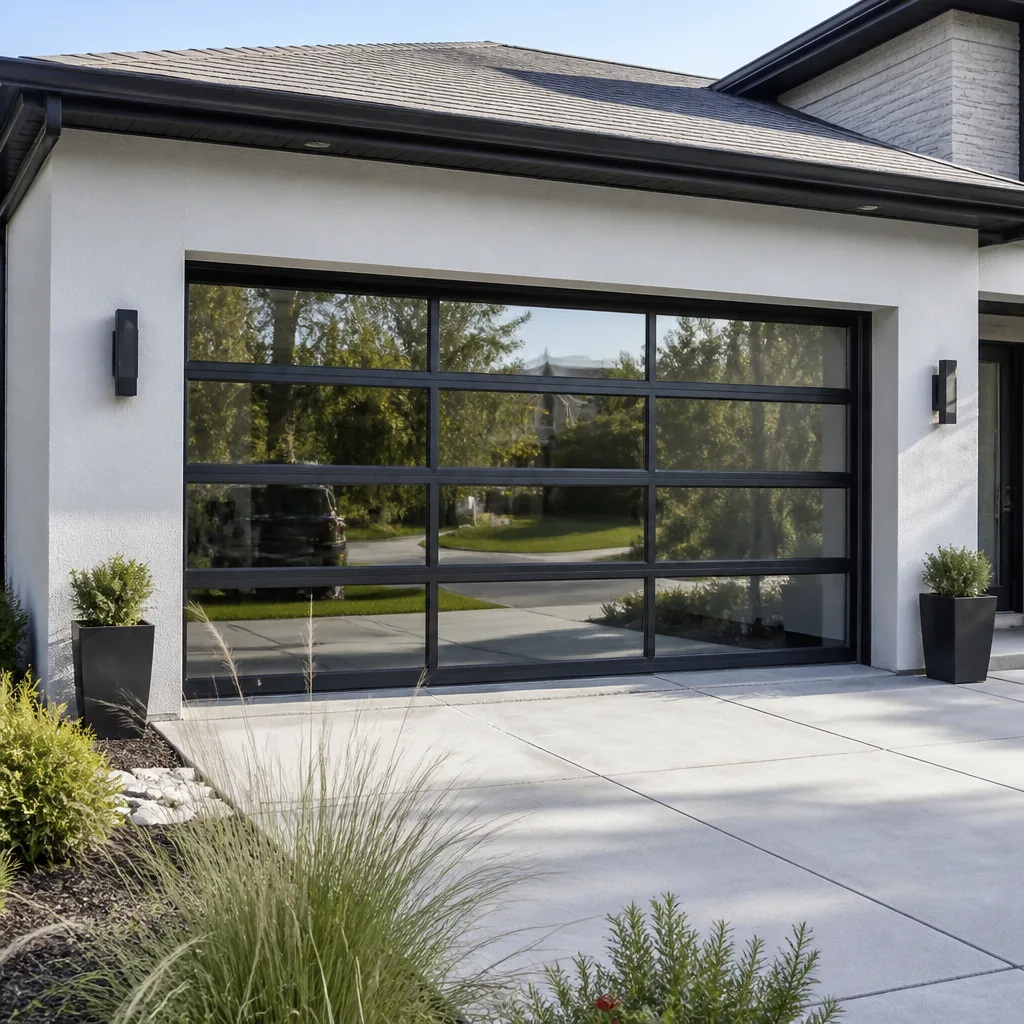 Full-view glass
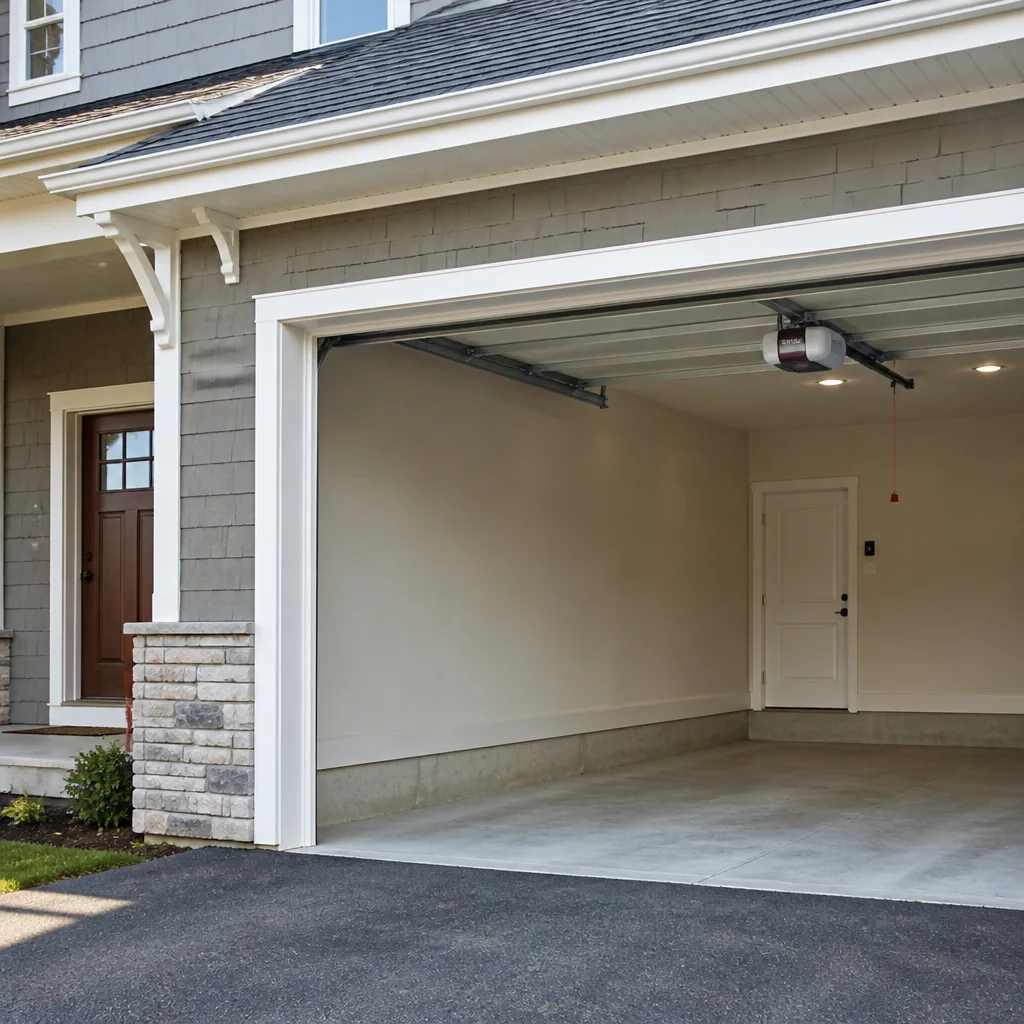 LiftMaster openers
 Chamberlain openers
Full 25-point door and opener safety check with every visit - springs, cables, rollers, tracks, and your LiftMaster or Chamberlain opener included
You get a price before we start. It does not change when the pro arrives.
Get your free estimateSeasonal Garage Door Care for Nora: Year-Round Homeowner’s Guide
The spring that snaps in February usually started failing in October. The cold didn’t cause that break; it finished a job that summer heat and humidity began months earlier. Most homeowners in Nora treat garage door care as a winter chore, something to think about when the temperature drops. That timing is backward. In central Indiana, the real damage happens in the shoulder seasons, and the freeze-thaw cycle that runs from late fall through early spring is what turns a small worn part into a snapped spring or a door that won’t close. This guide maps Nora’s actual weather calendar to the mechanical stress each season puts on your door, so your maintenance follows the equipment’s needs rather than an arbitrary quarterly schedule.
Quick Answer
Garage door care in Nora should follow the freeze-thaw cycle, not the calendar year. Fall is when you prepare for the cold, spring is when you inspect for winter damage, summer is when heat and humidity stress wood and electronics, and winter is when you protect the mechanism from sub-freezing temperatures. A short inspection at each transition catches most problems before they become repairs, and it’s far cheaper than waiting for something to break.
Styles & brands we work with
- Raised-panel steel
- Carriage house
- Modern flush
- Full-view glass
- LiftMaster openers
- Chamberlain openers
Table of Contents
- Fall: Getting Ahead of Indiana’s Freeze-Thaw Cycle
- Why Openers and Batteries Misbehave in the Cold
- Spring Recovery: Inspecting a Midwest Winter’s Damage
- Summer in Nora: Humidity, Heat, and Storm Checks
- Winter: Protecting the Door Through the Deep Cold
- Building a Maintenance Calendar Around Nora’s Frost Dates
- Brand-Specific Care and Why Parts Matter
Fall: Getting Ahead of Indiana’s Freeze-Thaw Cycle
Fall maintenance in Nora is less about “winterizing” and more about anticipating the freeze-thaw cycle. Every time the temperature crosses freezing in either direction, water that has worked its way into small gaps expands and contracts. On a garage door, those gaps are everywhere: the weather seal along the bottom, the joint between panels, the hinges, the tracks, and the concrete slab the door rests on. When water freezes in a crack, it widens that crack incrementally. Repeat it through a Hoosier winter and what was a hairline opening becomes a real gap.
The point of fall work is to close those gaps before the first hard freeze. Once temperatures stay below freezing, sealants don’t cure properly and adjustments are harder to make. Here’s what to prioritize before the cold sets in:
- Inspect the bottom weather seal. Run your hand along the seal where the door meets the floor. Any cracking, flattening, or gaps mean cold air and moisture will get in all winter. A worn seal also means the door won’t close tightly, which lets in pests and drives up heating costs.
- Check the door’s balance by hand. Disconnect the opener and lift the door halfway. It should stay roughly where you let go. If it drops or rises on its own, the springs are already under- or over-tensioned, and cold weather will make it worse.
- Look at the concrete slab for movement. Freeze-thaw heaves concrete. If the floor under the door has cracked or lifted since last year, the door may not seal properly even with a good rubber gasket.
- Lubricate hinges, rollers, and tracks with a product made for garage doors, not general-purpose grease. It won’t gum up as temperatures drop.
- Test the auto-reverse safety feature using a roll of paper towels or a small board under the door. The door should reverse on contact. This matters more in winter, when a door that fails to reverse is a genuine hazard for kids and pets.
None of this takes long. An afternoon in October is a cheap investment against a February emergency. If you’d rather have a professional check the balance and spring tension before winter, we’re glad to help: for garage door repair and pre-winter tune-ups, our technicians can spot problems that aren’t obvious from the outside.
Why Openers and Batteries Misbehave in the Cold
Garage door openers are electrical machines, and electrical machines behave differently as the mercury drops. Below 20°F, batteries lose a significant share of their capacity, which is why the remote in your car may stop working during a cold snap even though it worked fine in the fall. The same thing happens to the backup battery in most openers. It isn’t broken; it’s just cold.
The other issue is load. Cold thickens lubricants and makes the door mechanism stiffer, so the opener has to work harder to lift the door. If your springs are already a bit weak, the opener may trip its internal force limit and refuse to close the door, or it may reverse partway up. That’s the opener protecting itself, but homeowners often read it as an opener failure.
Brand matters here. Modern openers from LiftMaster and Chamberlain have force and travel limits that can be adjusted, and many of them log fault codes that point to what’s actually wrong. Genie and Raynor units have their own adjustment procedures, and the settings differ from model to model. Guessing at these settings is how you end up with a door that lifts an inch and stops.
Before Nora’s cold snaps arrive, do these things:
- Replace the remote’s battery, and check the opener’s backup battery if it has one.
- Have the opener’s force and travel limits checked while the mechanism is still warm and easy to test.
- Keep the door and opener dry; condensation on cold metal is normal, but it shouldn’t be dripping onto the control board.
- If your opener is old enough that the remote and the wall button both behave strangely, it’s worth testing before winter forces the issue.
We work on garage door opener repair across all the common brands, so if your unit is acting up as temperatures fall, we can tell you whether it’s a battery, a setting, or a failing part.
Spring Recovery: Inspecting a Midwest Winter’s Damage
When the ground thaws and the last frost passes, the first job is a careful inspection. A Midwest winter does things to a garage door that aren’t obvious from the inside of a car pulling in and out. Freeze-thaw movement opens gaps, spring cycles wear the torsion system, and road salt tracked in on the floor can corrode the bottom panel and hinges faster than anything else.
Here’s what to check each spring, in order:
- Walk the full perimeter of the door. Look for daylight coming through the sides or bottom. Daylight means a seal has failed, and it will only get worse as summer heat dries things out.
- Check for heaved or cracked concrete. As the frost leaves the ground, slabs can settle unevenly. If the floor under the door has shifted, the door’s alignment and seal are affected. You may need to adjust the tracks or replace the bottom seal, and in some cases a threshold repair.
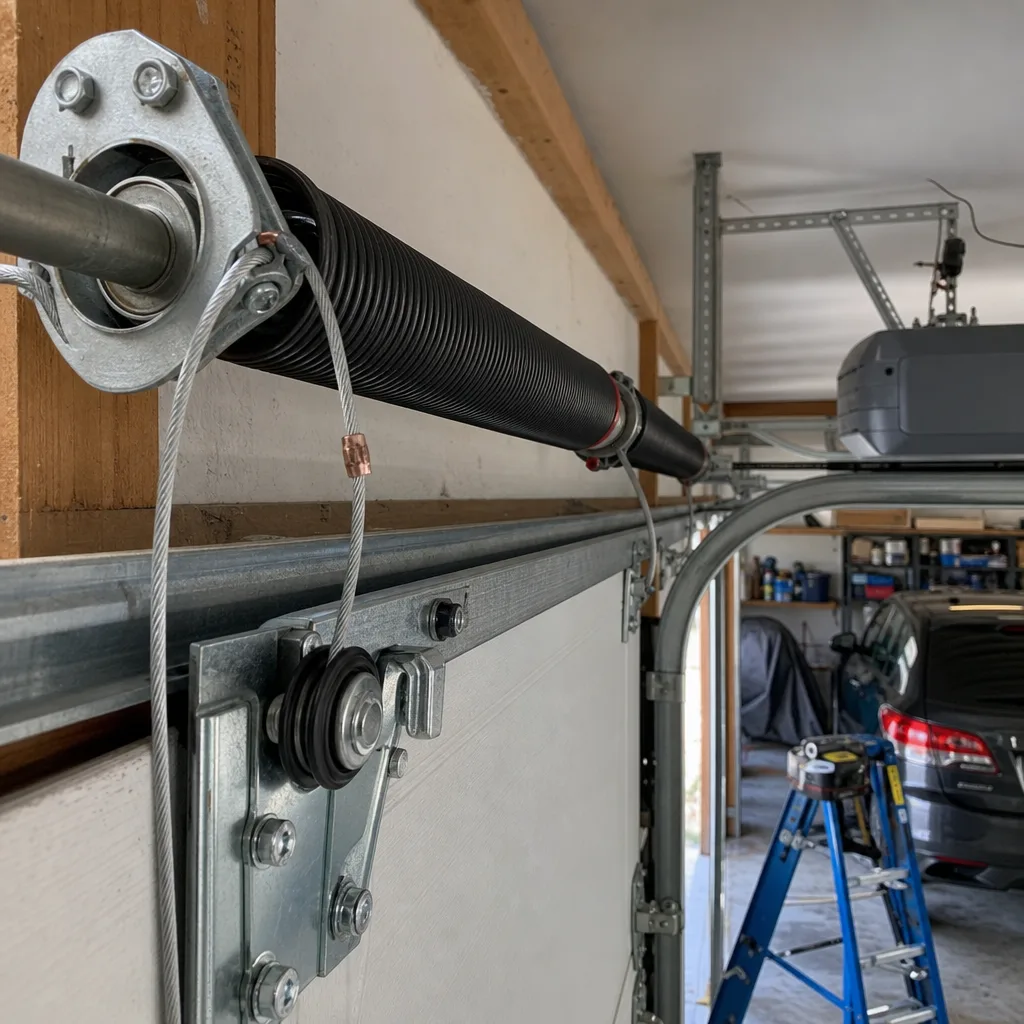
- Inspect the springs. Look for a visible gap in a torsion spring or stretched coils on extension springs. A torsion spring that fails usually does so with a loud bang; if you heard one over the winter, this is the check to make. A failed spring is not something to test by hand. The torsion system stores an enormous amount of energy, and it’s one of the most dangerous components on the entire door. A trained professional should handle any spring inspection or replacement.
- Look at hinges and rollers for rust. Road salt and winter moisture get into these components. Rusted hinges bind, and binding means the opener works harder and the door travels unevenly.
- Test the safety reverse again. Winter storage and cold can shift the photo-eye alignment. A quick test with a board under the door tells you if it still works.
Spring is also the season when homeowners in Nora discover that what felt “a little stiff” all winter is now a genuine problem. If your inspection finds something you’re not sure about, get it looked at before summer heat adds to the load. For a full Garage Door Repair Nora assessment, our technicians diagnose the door and opener together, since the two systems affect each other.
Summer in Nora: Humidity, Heat, and Storm Checks
Summer in central Indiana brings two forces to bear on a garage door: humidity and heat. If your door is wood or has wood components, humidity is the bigger issue. Wood absorbs moisture and swells; when the air dries out, it shrinks. Over a summer, that cycle can cause panels to warp, paint to blister, and joints to open. A wood door needs a fresh coat of exterior-grade finish before the humid season and a check of its lower edges, which take the most moisture.
Heat affects the opener and electronics directly. An opener mounted in a garage that bakes all afternoon can overheat, and a control board that’s marginal in spring may start acting unpredictably in July. If your opener quits on hot afternoons and works again in the evening, the board is the likely suspect. This is a common pattern with older units from any brand, and it’s a sign to have the electronics checked rather than to replace the whole opener on impulse.
Summer is also storm season. High wind can bend tracks, and a door that takes a hit can come off its rollers. After any significant storm, check these things:
- That the door still opens and closes smoothly, with no catching or scraping.
- That the tracks are straight and parallel; a bent track is an alignment problem, not just a cosmetic one.
- That panels aren’t dented or misaligned in a way that breaks the seal.
- That the opener still reverses on contact after the storm has passed.
If a storm has knocked your door out of alignment, don’t force it. Forcing a misaligned door can damage the springs, the opener, or both. Call a specialist who can assess the whole system.
Winter: Protecting the Door Through the Deep Cold
Winter is less about major maintenance and more about protecting what fall set up. In deep cold, your job is to keep the mechanism moving freely and avoid doing anything that puts extra stress on the springs. Keep the tracks clear of snow and ice, which can jam rollers, and don’t pour hot water on a frozen track; the sudden temperature change can crack or warp it. A rubber mallet, used gently, is a better tool for freeing a stuck roller, and even then only if you’re sure the track isn’t the actual problem.
Watch for a few winter warning signs:
- A door that opens partway and stops. This is usually the opener’s force limit reacting to a stiff, cold mechanism. Don’t keep cycling it. Have it checked.
- A loud bang from the garage. That’s often a torsion spring failing. Don’t try to lift the door or operate it. Have it repaired before you use the door again.
- A door that won’t close all the way. A frozen bottom seal or a small obstruction can do this. Check the seal first, then the photo-eye alignment.
- A remote that only works when you’re close. Cold reduces battery output. Replace the battery before assuming the opener is failing.
If something goes wrong in the cold, the safest move is to leave the door in place and call a specialist. Garage door springs and cables are under high tension, and a DIY repair in freezing conditions, on cold metal, with cold hands, is how people get seriously hurt. Our technicians have up to 12 years of experience with these systems, and we’d rather diagnose than have you risk it.
Building a Maintenance Calendar Around Nora’s Frost Dates
The most useful thing you can do for your garage door is stop thinking about it quarterly and start thinking about it in terms of Nora’s actual weather. In central Indiana, the first hard freeze typically arrives in late October or early November, and the last frost usually falls in mid-to-late April. Those two dates are your anchors. The work before the first freeze is preparation; the work after the last frost is recovery.
Here’s a simple calendar to work from:
- Early fall, before the first hard freeze. Seal, lubricate, check balance, and have the opener’s settings tested while it’s warm. This is the most important window.
- Mid-winter, at the first cold snap. Replace remote batteries, clear snow and ice from tracks, and note any new stiffness or strange sounds.
- Early spring, after the last frost. Full inspection for freeze-thaw damage: seals, concrete, springs, hinges, rollers, safety reverse.
- Late spring or early summer. Wood door finish check, opener electronics check before the heat peaks, and storm-season hardware inspection.
- Mid-summer. Post-storm checks and a look at track alignment and panel condition.
Two inspections a year, one before the freeze and one after, catch most problems. If you want a professional set of eyes at those transition points, a free estimate with our team can tell you what needs attention and what can wait. If you’re considering a replacement rather than repairs, garage door installation is a good moment to have the whole system assessed at once.
Brand-Specific Care and Why Parts Matter
Garage doors and openers aren’t universal. A part that fits a Wayne Dalton door may not fit a Clopay, and the adjustment procedures for a LiftMaster opener differ from those for a Genie. When a repair shop has to special-order a common component, the job that should take an afternoon turns into a week of waiting with a door that won’t close. That’s the practical reason brand knowledge and parts availability matter.
We work on all the major brands: LiftMaster, Chamberlain, Genie, Clopay, Amarr, Wayne Dalton, Craftsman, and Raynor. That means when we show up, we know the specific hardware in your garage and the way it’s designed to be adjusted and serviced. For the homeowner, it means fewer return visits and fewer parts on backorder. It also means a technician who isn’t guessing at your door while charging you for the privilege.
If your door is past the point where maintenance makes sense, brand knowledge still matters, because the replacement has to match the opening, the opener, and the way you use the door. New doors are measured, ordered, and scheduled; it isn’t same-day work. Our team will come out, measure, and give you a written price for the door that fits your situation.
Common Mistakes to Avoid
- Thinking of maintenance as winter-only. The freeze-thaw cycle that damages doors in Nora starts in fall, so the important work happens in October, not January. By the time it’s cold enough to notice a problem, the damage is already done.
- Lubricating tracks and springs. Tracks should be kept clean and dry; the rollers and hinges are what need lubrication. Lubricating a torsion spring can attract grit and make it bind.
- Testing springs by hand. Torsion springs store enough energy to cause serious injury. Check balance with the door, not the spring, and let a specialist handle anything involving the spring system itself.
- Assuming a cold-weather opener problem is the opener. In sub-20°F temperatures, batteries weaken and cold mechanisms create extra load. Check the battery and the door’s balance before replacing electronics.
- Ignoring the concrete under the door. Heaved or cracked concrete from a Nora freeze-thaw winter can throw off the door’s alignment and seal even after a repair. If the floor has moved, the door has to be adjusted to it.
- Forcing a door that’s stopped. A door that stops partway up or won’t close is telling you something’s wrong. Forcing it can damage the springs, the opener, or both.
- Skipping a spring inspection after a loud noise. A bang from the garage is often a spring breaking. Have it checked before using the door again, even if the door seems to lift.
See the difference
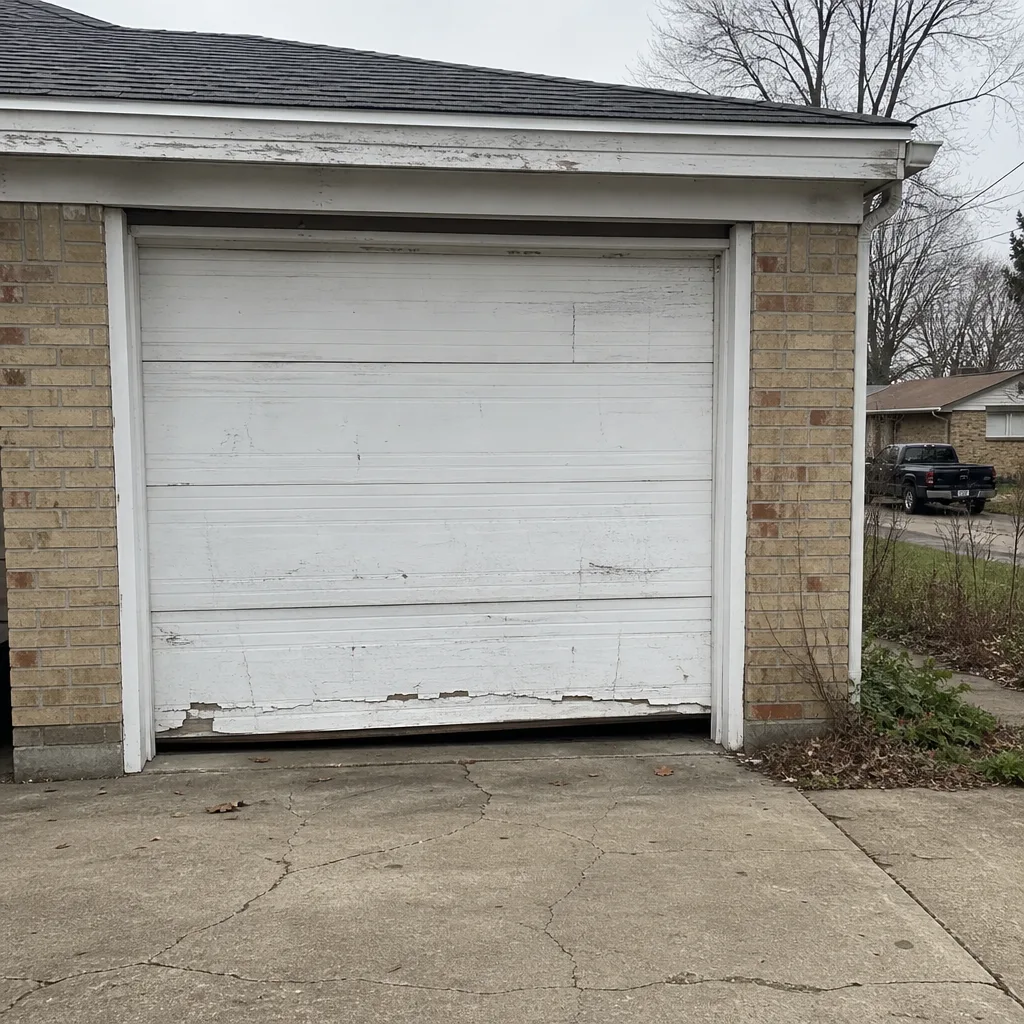 Before
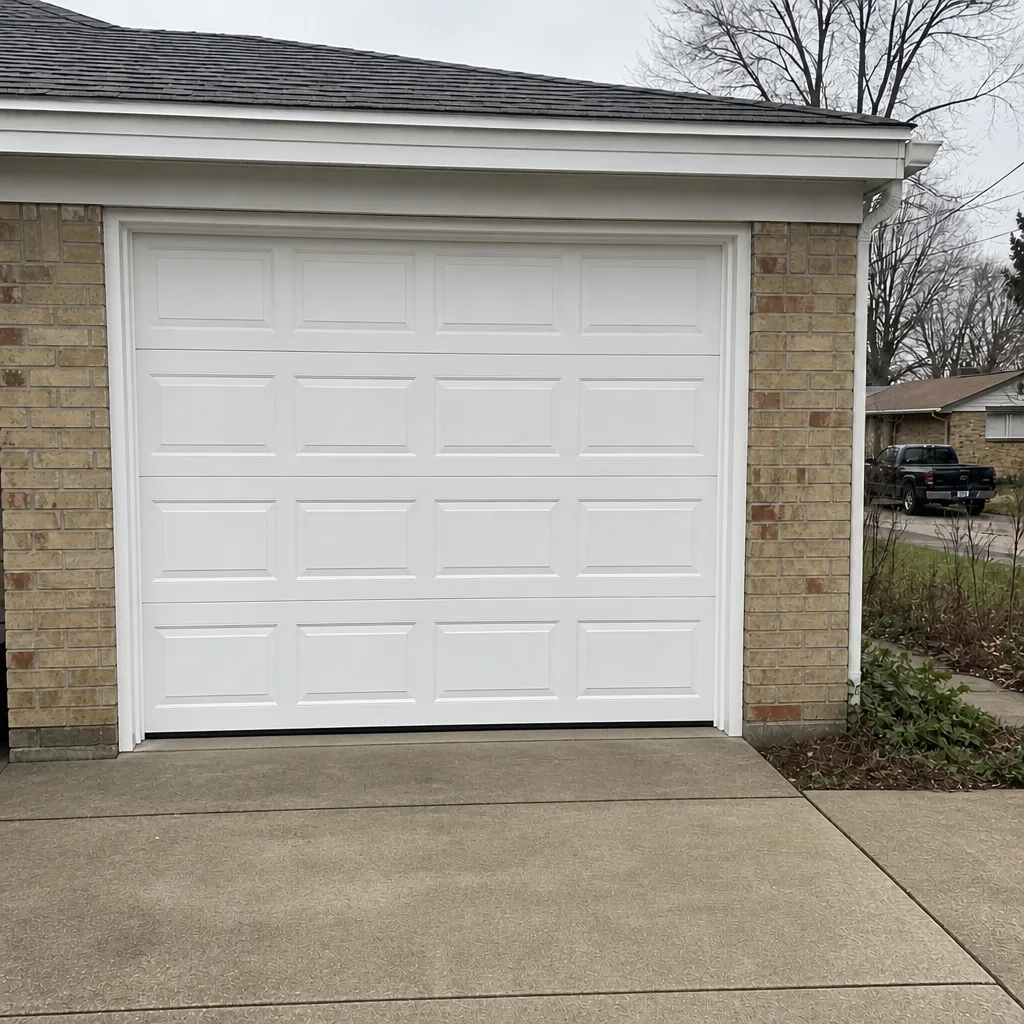 After
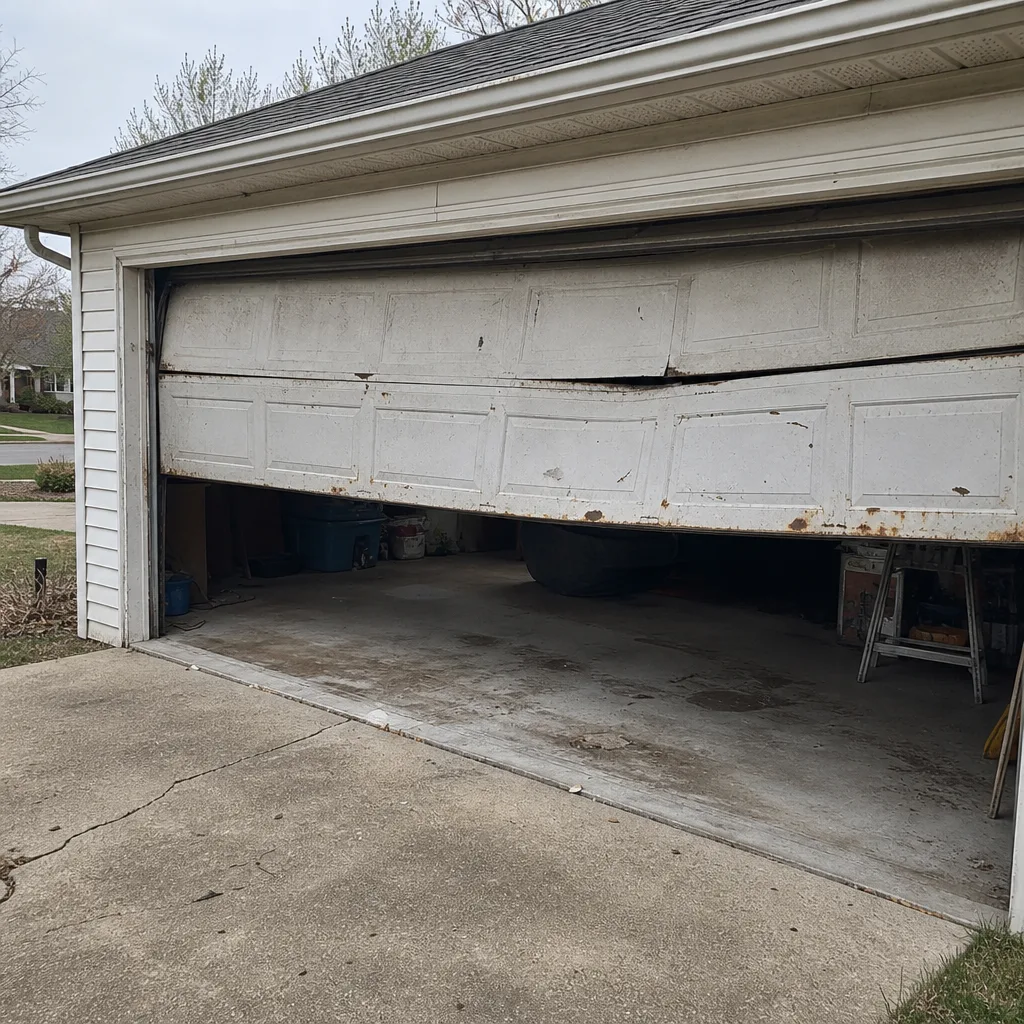 Before
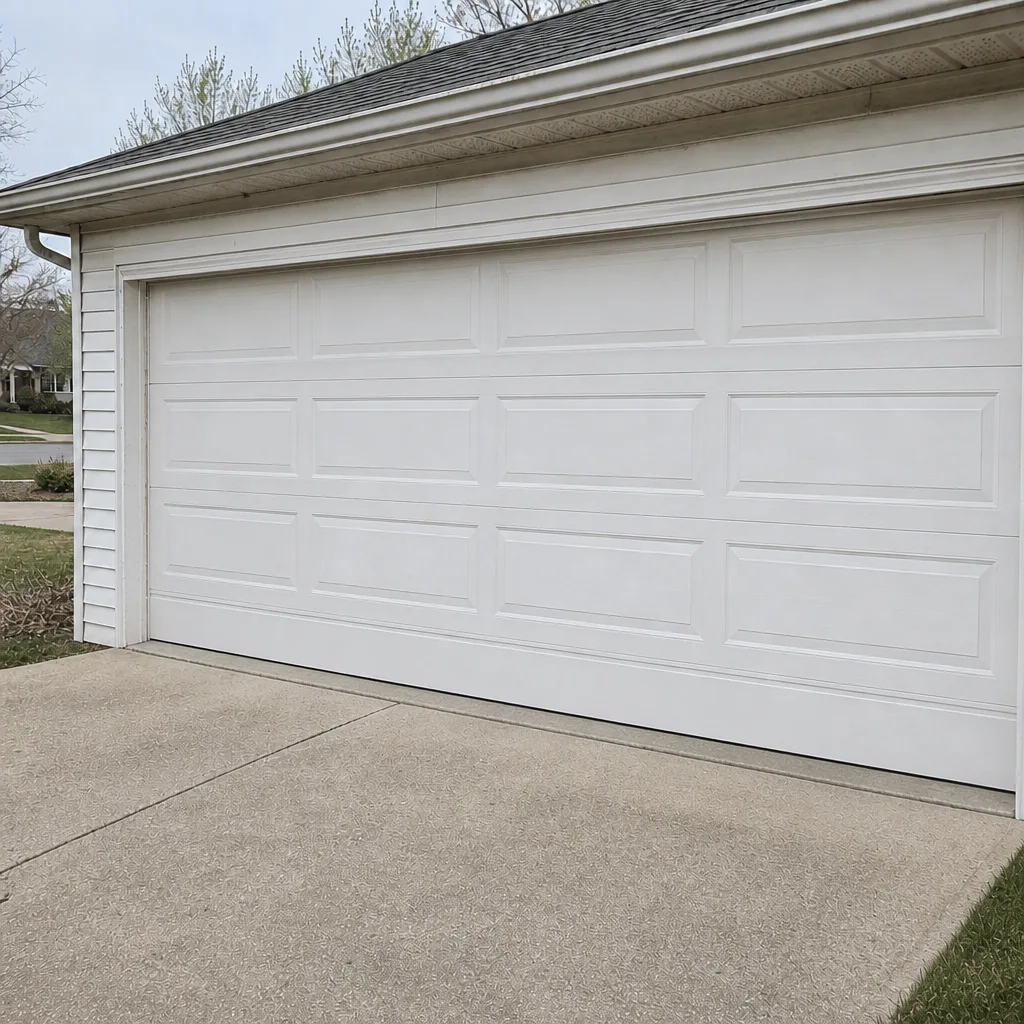 After
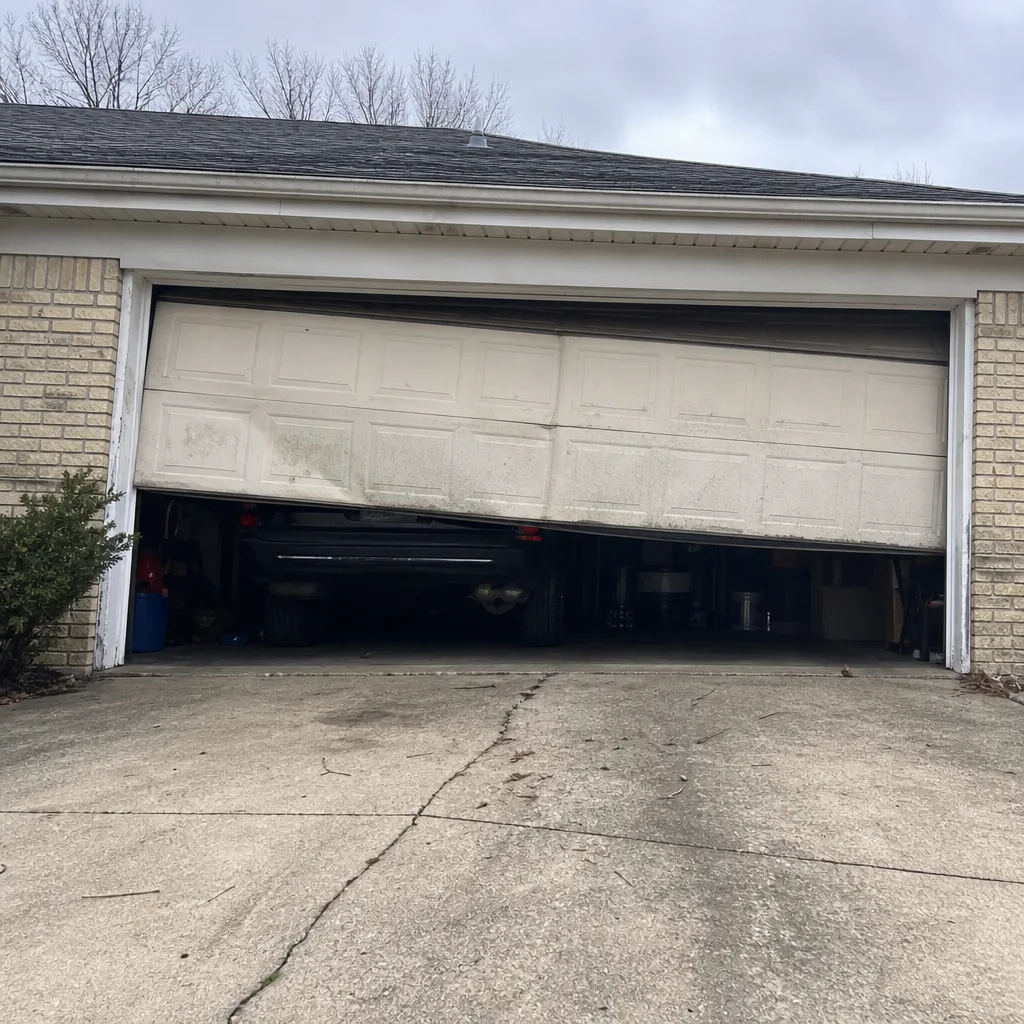 Before
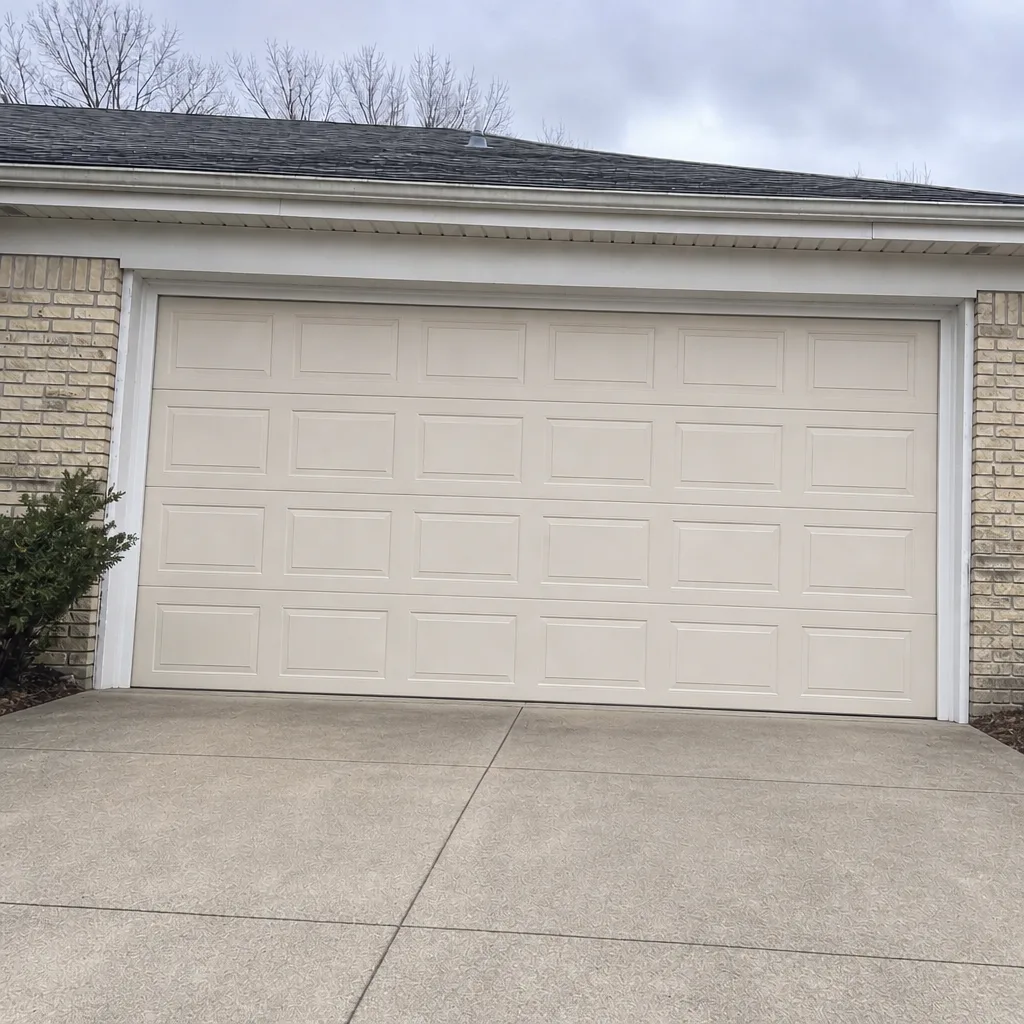 After
When to Call a Professional
Some maintenance is homeowner work: lubricating hinges and rollers, replacing remote batteries, clearing snow from tracks, and testing the safety reverse. Some of it is not. Call a professional any time a spring is involved, including a door that’s out of balance or has made a loud noise. Call if the door is off its tracks, if a storm has bent the tracks or panels, or if the opener won’t respond to force or travel adjustments. Call if the concrete under the door has shifted enough that the door won’t seal. And call if you’re unsure; a quick look is cheaper than a failed part. Garage Door Repair Nora offers free estimates in Nora. Call (833) 468-3650, and if it’s a repair you need, we’ll get a local pro out to you. We quote the price before any work starts, so you know what you’re paying for before we lift a tool.
Frequently Asked Questions
Twice a year is the practical answer: once in early fall, before the first hard freeze, and once in early spring, after the last frost. Those two points line up with Indiana’s freeze-thaw cycle, which is when most damage happens. If your door is older or has a wood panel, add a quick summer check for humidity and storm damage.
Cold weather weakens batteries and makes the door mechanism stiffer, so the opener has to work harder. The most common cause is a weak remote or backup battery, followed by the opener’s force limit reacting to a cold, stiff door. Replace the battery first, then have the opener’s settings checked while it’s warm. Call (833) 468-3650 if the door also reverses or stops partway.
No. Torsion springs and cables are under high tension, and a failure can cause serious injury. A spring repair is one of the most dangerous jobs in the trade. Leave it to a trained specialist and don’t operate the door until it’s repaired.
Most routine repairs fall into a moderate range, and the exact price depends on the part and the door. We give you a written estimate before any work starts, and the written estimate is the price, with no surprise additions after the fact. Call (833) 468-3650 for an exact quote; estimates are free.
No. We quote the job before we start, and the quote is what you pay. If the inspection turns up something beyond what was quoted, we’ll explain it and get your agreement before doing anything. We don’t add charges after the work is done.
Yes. The door and the opener work as one system, so we diagnose both together. That covers Garage Door Repair Nora work, opener service, spring replacement, and new installation. If the opener is failing but the door is sound, we’ll tell you; if it’s the other way around, we’ll tell you that too.
The Bottom Line
Garage door care in Nora follows the weather, not the calendar. The freeze-thaw cycle is the enemy, and it does its damage in fall and spring, so those are the seasons that matter. Fall preparation closes gaps before they freeze and widen; spring recovery catches winter damage before summer heat adds to it. Summer brings humidity and storm checks, and winter is about protecting the mechanism from cold and knowing when to stop and call a pro. Two inspections a year, the right parts, and a specialist who knows your brand will keep the door working reliably. When you need help, call (833) 468-3650 for a free estimate.
Written by the team at Garage Door Repair Nora.