Last updated November 20, 2026
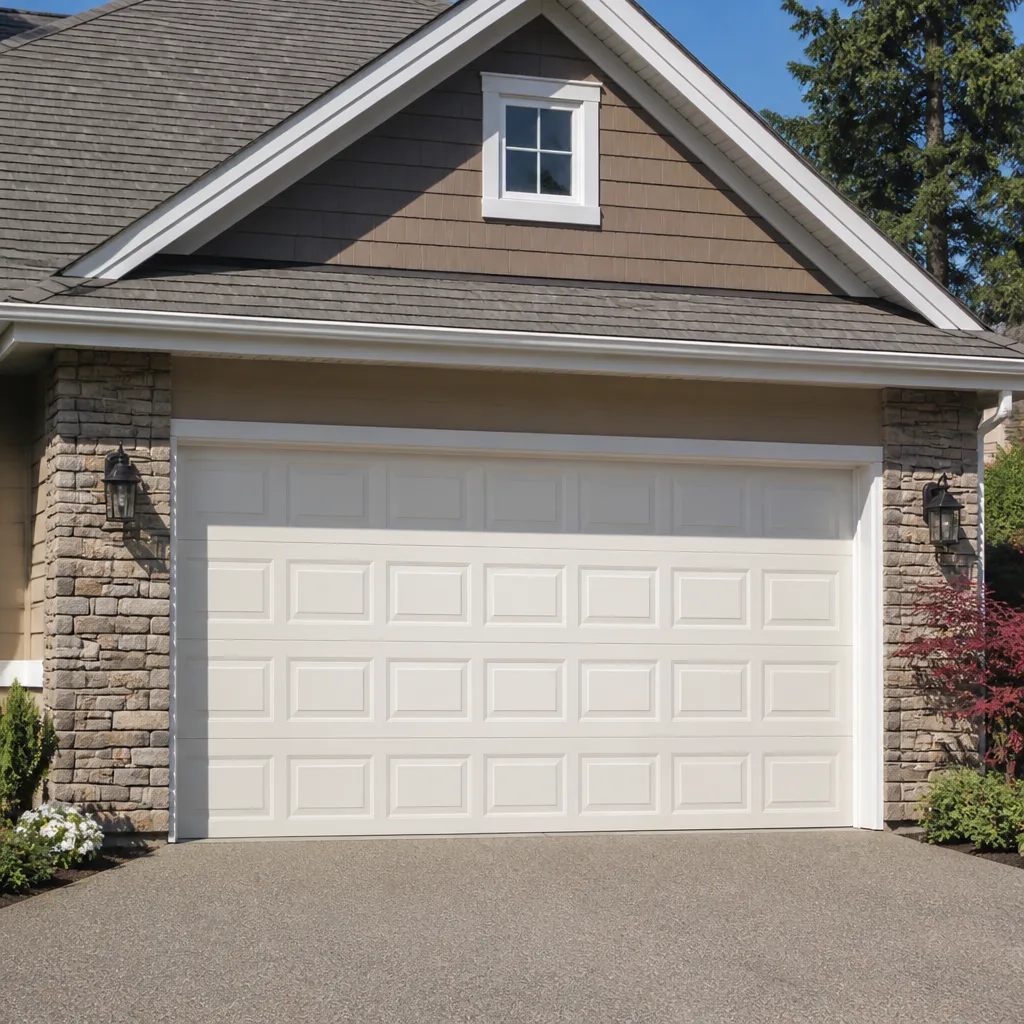 Raised-panel steel
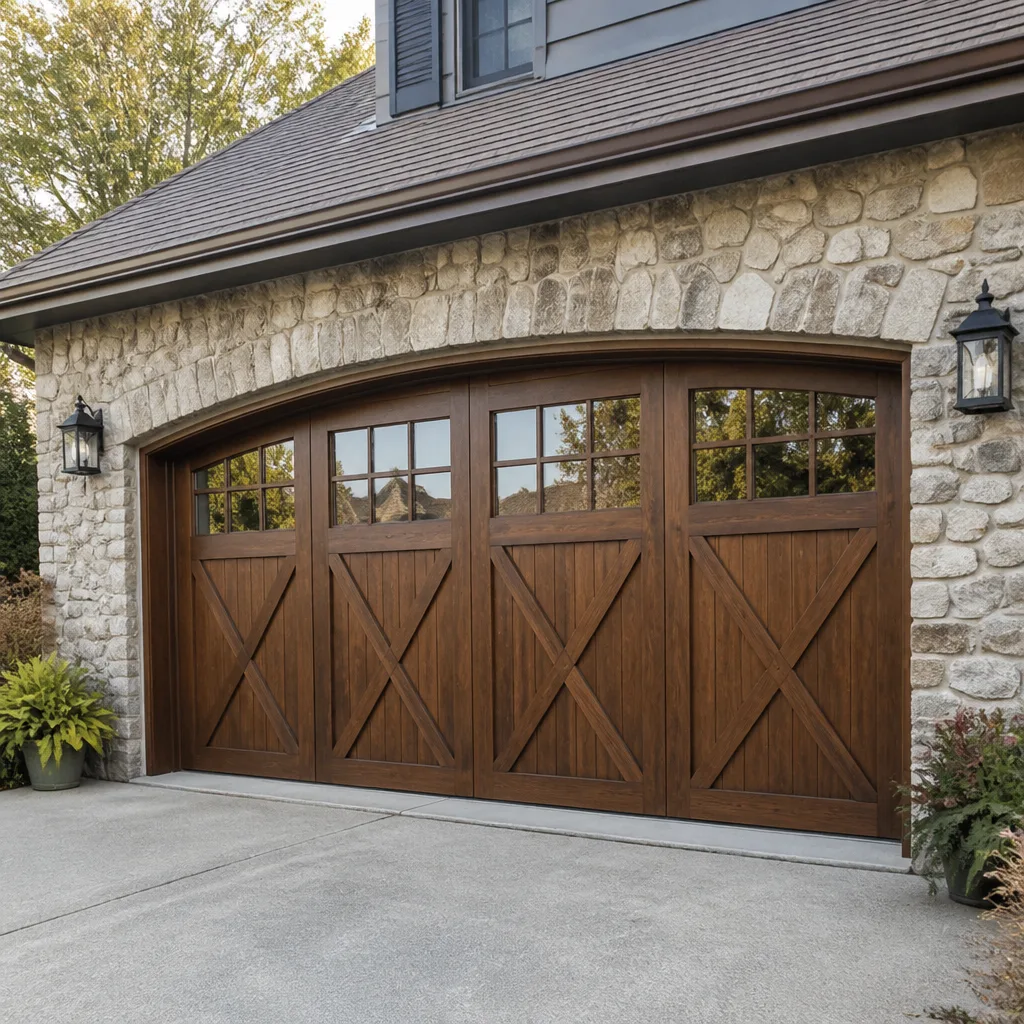 Carriage house
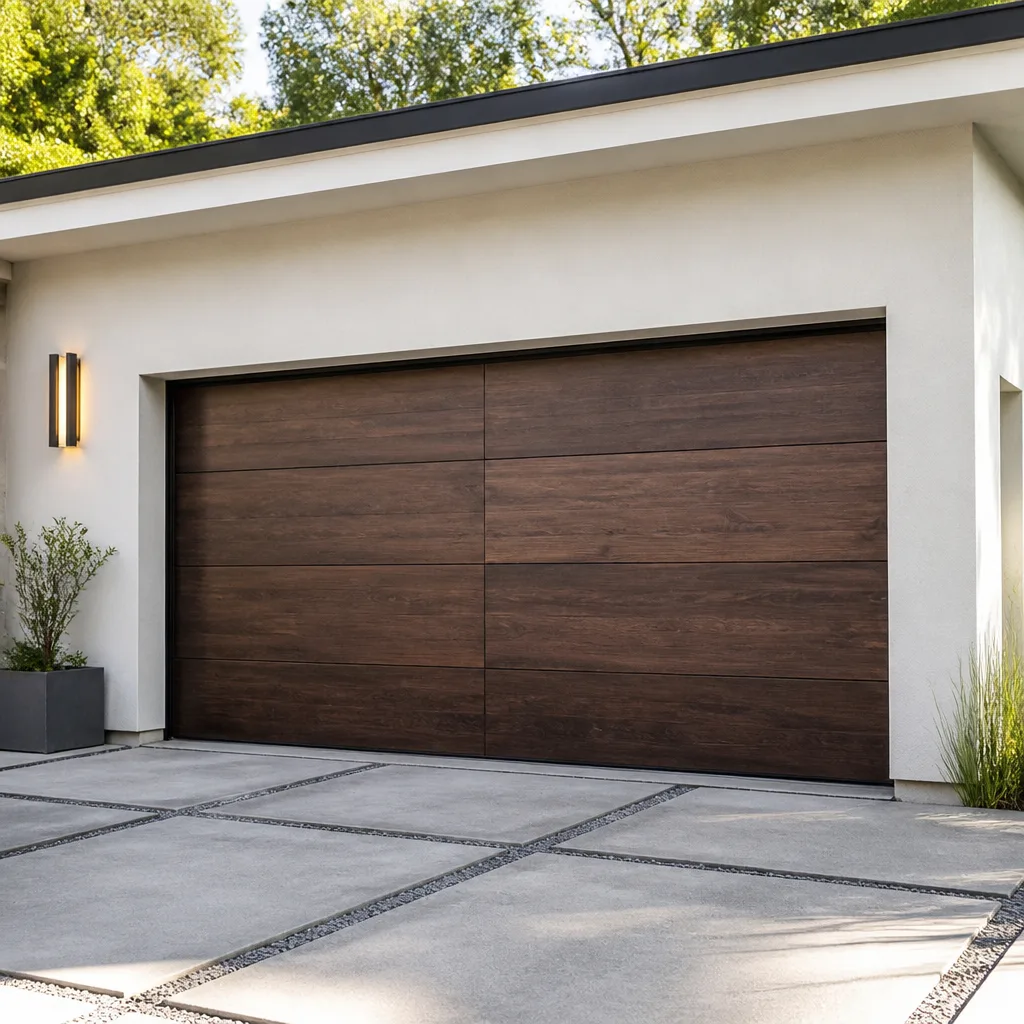 Modern flush
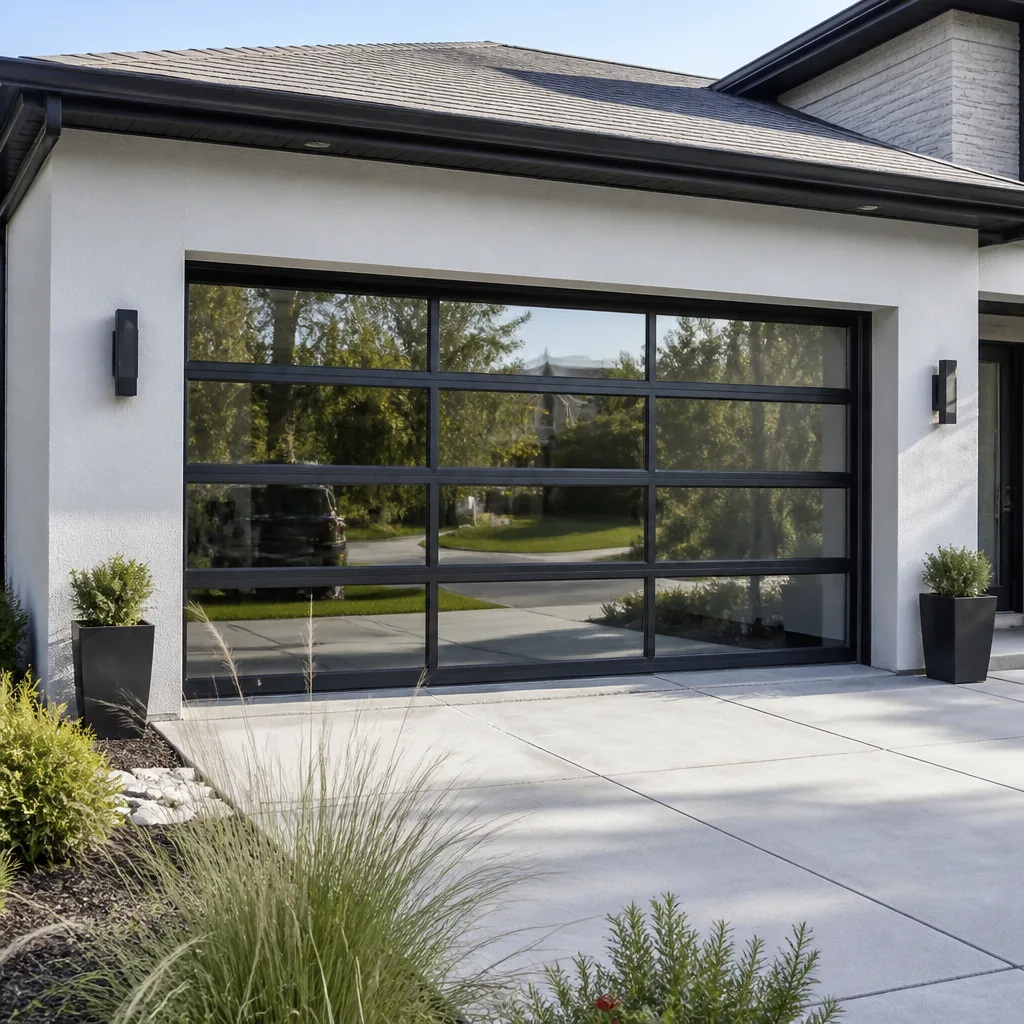 Full-view glass
 LiftMaster openers
 Chamberlain openers
Full 25-point door and opener safety check with every visit - springs, cables, rollers, tracks, and your LiftMaster or Chamberlain opener included
You get a price before we start. It does not change when the pro arrives.
Get your free estimateGarage Door Warning Signs: A Nora Homeowner’s Reference Guide
A garage door that takes three seconds longer to open than it did six months ago isn’t “just getting old.” It’s telling you something specific, and that something has a name and a repair cost that’s about to get higher. Most doors that fail completely in Nora gave clear warnings first: a grind, a pop, a gap at the floor, a reverse that didn’t used to happen. The trouble is that we’re conditioned to live with small changes. The door still opens, so we stop hearing it.
This guide maps the sounds and sights to their likely causes, sorts the warning signs into watch-and-monitor, call-today, and stop-using-the-door, and shows you how to describe what you’re seeing so the right parts are on hand before a technician arrives.
Quick Answer
Garage door warning signs fall into three groups: sound changes (grinding, popping, scraping, squealing), visual changes (frayed cables, rust streaks, an uneven floor gap, a bowed panel), and response changes (a slow door, a reversing door, an intermittently dead door). Grinding and popping usually point to rollers, tracks or springs; a slow or reversing door points to springs, balance or opener sensors; a sagging or bowing panel is a structural warning. Frayed cables and a door that reverses on its own are stop-using-it-now signs.
Styles & brands we work with
- Raised-panel steel
- Carriage house
- Modern flush
- Full-view glass
- LiftMaster openers
- Chamberlain openers
Table of Contents
- What the sounds are telling you: a symptom-to-diagnosis table
- The 30-second visual walkthrough any homeowner can do
- When the door gets slow, reverses, or stops responding
- Watch and monitor vs. call today vs. stop using the door
- How to describe the problem so the right parts are on hand
- Spring warning signs and why you never touch them
- What a Nora climate and housing stock do to a garage door
- Opener warning signs that look like door problems
What the sounds are telling you: a symptom-to-diagnosis table
A garage door is a mechanical system with a handful of moving parts, and each part has its own voice. In our experience, listening carefully for ten seconds while the door runs tells a technician more than a five-minute visual inspection. You don’t need to know the names of the parts to notice that a sound is new.
Here’s how the most common sounds in Nora garages map to likely mechanical causes:
- Grinding, low and rough, from the ceiling area: worn opener gears or a failing bearing. On a Craftsman or Chamberlain opener that’s been running daily, this is often the gear inside the motor housing rather than anything in the door itself.
- Popping or banging, once per open or close: a torsion spring that’s starting to slip, a loose hinge, or a roller that’s jumped its track. Popping that repeats at the same point in the cycle is the one to watch closely.
- Scraping, metal on metal: a misaligned track or a bent panel rubbing as the door travels. This gets worse fast because the friction wears the roller and the track together.
- Squealing, high-pitched: dry or worn rollers and hinges. This is usually the least serious sound, and the easiest to fix, but it’s also the one people ignore the longest.
- A single loud bang (or a snap) followed by a door that won’t lift: a broken torsion spring. That’s the emergency sound, and it’s covered in detail further down.
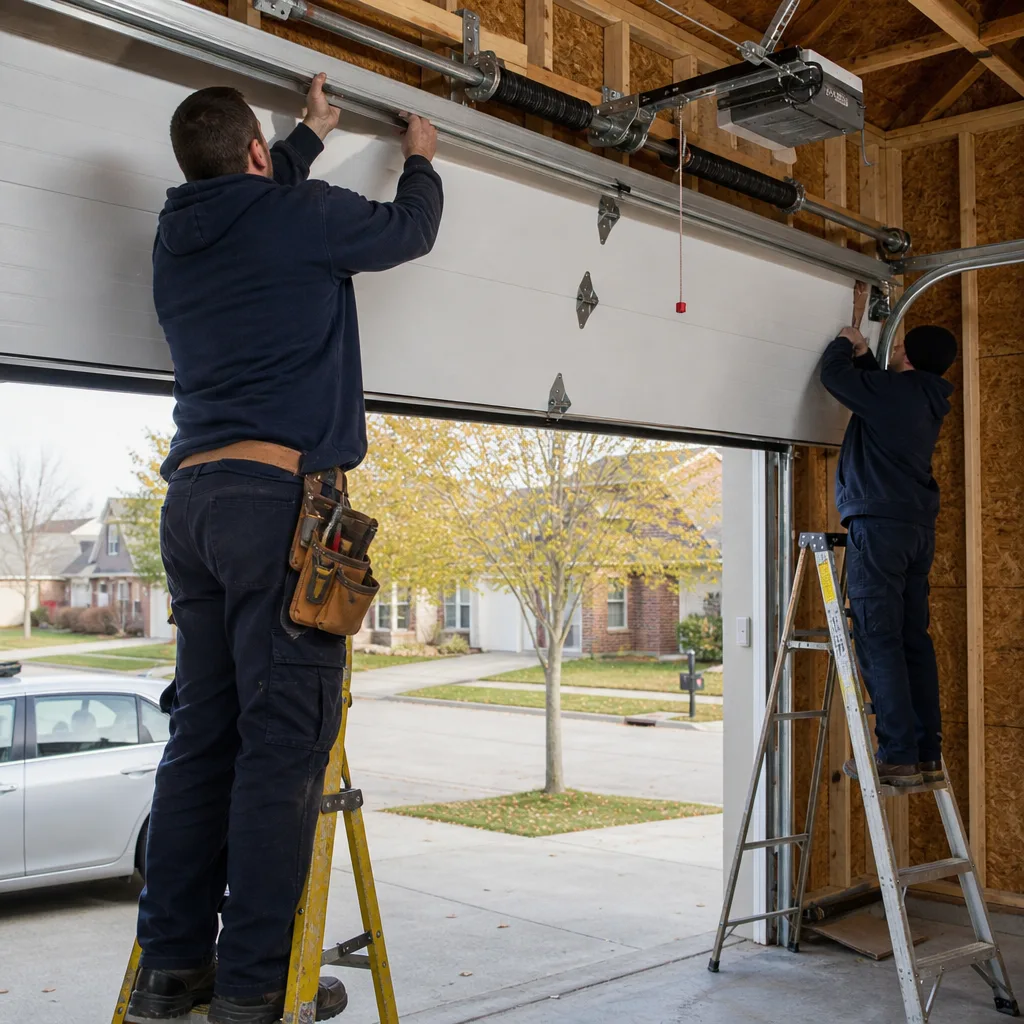
For a Nora homeowner reading this over the phone with a technician, the useful detail is the timing: does the sound happen all the way through the travel, or only at the very start, or only near the floor? Scratch that down. It shortens the diagnostic step. If the door has already failed to lift, we carry the Garage Door Repair Nora service through the full door and opener mechanism so the diagnosis covers both at once.
The 30-second visual walkthrough any homeowner can do
You don’t need tools to spot a door in trouble. Stand inside the garage with the door closed and walk the perimeter. The list below is the order that catches the most problems in the least time:
- Cables at the sides. Look at both the left and right lift cables. Fraying, a kink, or strands splayed apart is a stop-using-it sign, because a cable that fails can whip. Don’t touch it, and don’t try to straighten it.
- The gap at the floor. Close the door and look across the bottom rubber. A gap wider on one side means the door is out of balance or a panel is warped. An uneven gap also lets cold air and summer heat under, so it’s worth mentioning even if it’s small.
- Rust patterns. Rust streaks down a panel are usually from a worn seal or a scratch that’s holding moisture. Rust across a hinge or roller tells you the part is older than the rest, and worth pre-emptively replacing.
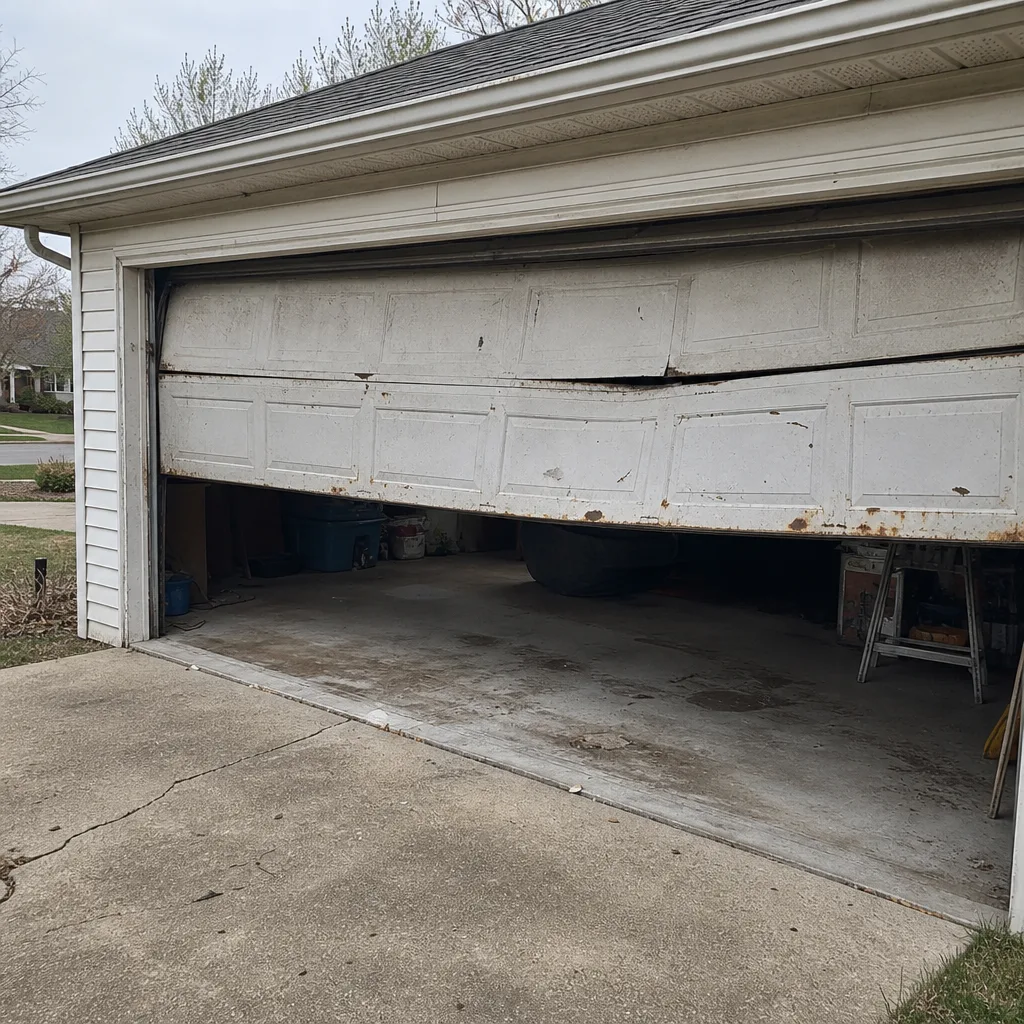
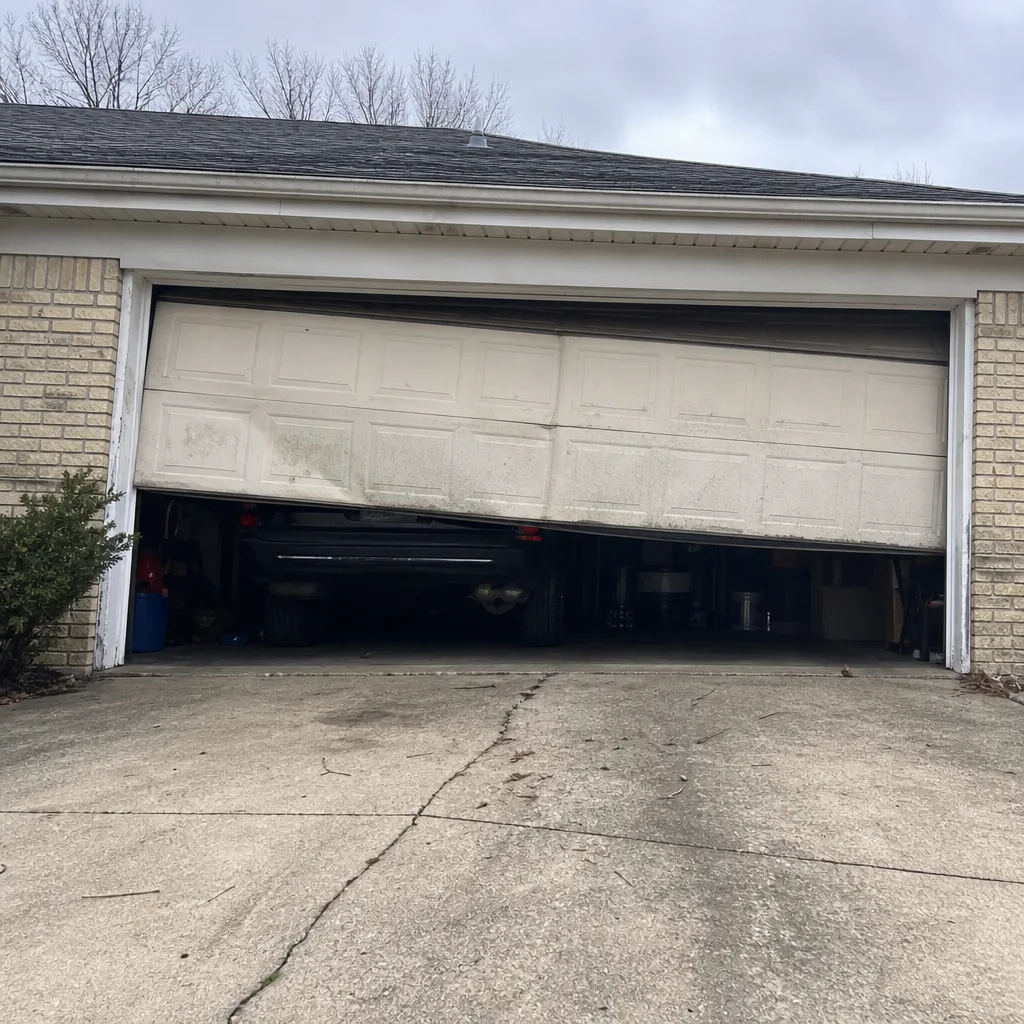
- Panel bowing. Sight down the closed door from one side. If a section curves or the seam between sections isn’t straight, the panel is bowing. That’s structural and needs a technician.
- The track at each corner. Look for dents, a bend, or a bracket that’s pulled away from the wall. A bent track drags the door and causes the scraping sound you may have noticed.
- The springs above the door. Look, don’t touch. A visible gap in a torsion spring, or a stretched-out extension spring on a Clopay or Amarr door, means the spring is done.
Thirty seconds is enough for all six checks, and doing that walk once a month is the best insurance against a door that fails on a morning you can’t be late. If you spot any of the visual signs, note which one and roughly when you first noticed it. When you call us to book garage door repair, that note is what a technician uses to load the right springs, cables and rollers before setting out.
When the door gets slow, reverses, or stops responding
A door that responds differently is communicating just as clearly as a door that makes noise. There are three responses to understand, and each one points to a different part of the system.
A slow door. If the door opens or closes noticeably slower than it used to, the most likely cause is spring tension that’s no longer doing its share of the lifting. The opener motor steps in to make up the difference and the whole cycle drags. On a Wayne Dalton door with an old torsion spring, this often shows up as a door that’s fine in warm weather and reluctant on a cold morning, because the steel and grease stiffen. Speed and spring tension are linked, and a slow door is a watch-and-monitor sign unless it’s paired with a bang or a stuck door.
A door that reverses. A door that goes down, touches something, and climbs back up is doing exactly what it was designed to do. But if it reverses before touching anything, or reverses with the rays of the safety sensors interrupted by a shadow or a bundled-up extension cord, the opener is misreading the obstruction. The fix is usually in the sensor alignment or the opener’s travel limits, not the door. If the reversal happens irregularly without any obstruction at all, that’s a call-today sign.
A dead or intermittent door. Press the wall button and nothing happens, or nothing happens sometimes. That’s a signaling problem, and it lives at the opener: a worn wall button, a failing logic board, or a remote that’s lost its connection. Since the opener and the door are one mechanism, we diagnose both together. That’s why opener calls are handled as garage door opener repair rather than a separate visit.
Watch and monitor vs. call today vs. stop using the door
Not every warning sign is urgent. Sorting them correctly saves money and, in a few cases, prevents an injury. Here’s how we break them down for Nora homeowners.
Watch and monitor
- Squealing or chirping when the door runs
- Rust on hinges, rollers or the bottom rail
- A slightly uneven gap at the floor
- A door that’s a little louder in cold weather and quiet in summer
- Rough paint or a minor dent with no effect on travel
These are the signs worth a note on your phone with a date next to them. If they don’t change over a few weeks, the door is holding. If they get worse, you’ve got a record of when it started.
Call today
- Scraping or grinding that’s getting louder
- A popping sound at the same point in every cycle
- A door that suddenly runs slower than it used to
- A reversing door with no obvious obstruction
- A door that’s stopped responding to the wall button or the remote
- A bent track or a visibly bowing panel
Stop using the door
- A frayed or splayed cable
- A visible break in the torsion spring
- A door that slams or falls on the way down
- A door that reverses on its own in the middle of travel
- Any situation where the door won’t stay up on its own
For the stop-using group, close the door only if it’s already down, and call. Don’t cycle it to see whether it fixes itself; each cycle puts more stress on a part that’s already failing.
How to describe the problem so the right parts are on hand
This is where most repair calls go sideways, and it has nothing to do with the technician’s skill. A vague description means the technician walks in cold, diagnoses on site, and may need a second visit for a part. On a door that’s made by Clopay, Amarr, Wayne Dalton, or a brand whose parts are specific to the model, having the right part first time matters. Parts on hand, not on order, is the whole reason we ask these questions before we set out.
Six details make the difference:
- The brand and, if you can find it, the model. On the opener, the label is usually on the back panel or under the light cover. On the door, the sticker is often on the inside of the top panel. A Craftsman opener and a LiftMaster opener share a family resemblance but take different remotes.
- The exact sound and when it happens. “Grinding at the start of the open cycle, quiet on the way down” tells us more than “noisy.”
- What the door does, not just what it sounds like. Does it lift all the way, partway, or not at all? Does it lower normally or drift back up?
- Whether the opener or the door is the suspect. If the opener runs but the door doesn’t move, that’s a different call than if the opener is silent.
- What you’ve already checked. Sensor lights, the wall button, the manual release. Knowing what’s been ruled out saves time.
- When it started and whether it’s getting worse. A week of scraping is a different job from an afternoon of it.
Give us those six answers on the phone and we can usually tell you what’s likely wrong, roughly what it’ll cost, and whether the part is one we keep in stock. That’s what specialization buys you. A generalist contractor has to order the part; we don’t.
Spring warning signs and why you never touch them
The torsion spring above the door stores enough energy to lift the full weight of the door, and it holds that energy even when the door is down. A garage door spring is the single most dangerous component in a residential garage, and it’s the one we most often hear homeowners describe as “probably just worn out.”
The warning signs to look for on a spring:
- A single loud bang from the garage, often at a random time and not while the door is moving
- The door is very heavy to lift by hand, or won’t lift at all when the opener runs
- A visible gap in the spring coil on a torsion setup
- A stretched-out, sagging coil on an extension spring
- A crooked or open-and-off-center gap in an older spring after a cold snap
If you see any of these, treat it as a stop-using-the-door sign and call a professional. Don’t try to lift the door manually to “test” it. Don’t try to tighten, bend, or replace the spring, and don’t use the manual release as a workaround. Spring steel is under tension and can unwind with enough force to cause serious injury, and this is exactly why spring work is a specialist job. We do it safely with the right tools and the correct winding bars, and the price is quoted and agreed before any work starts.
One thing to know about cost: a spring is replaced one at a time. A matched pair is usually replaced together, because if one spring has reached the end of its life the other is close behind, and a single replacement leaves the door unbalanced. Never quote a single-spring price and expect it to cover both, and never let a technician replace one side without explaining why.
What a Nora climate and housing stock do to a garage door
Nora sits in central Indiana, and that means real seasonal swings: cold winters with hard freezes, humid summers, and spring and fall storms that bring wind and impact debris. A garage door in Nora works harder over a year than a door in a milder climate, and it shows in ways that are specific to this area.
Cold snaps are the busiest time for spring failure. Steel contracts, grease thickens, and a spring that was already near the end of its cycle gives out on the first hard freeze. Wooden or wood-faced doors take on moisture over a wet spring and dry out through summer, which is when a panel starts to bow or a seam opens. Wind-driven rain gets under the bottom seal and rusts the bottom rail and the hinges first.
Housing age matters too. Nora has a mix of older homes with original wooden doors and newer builds with steel doors and modern openers, and each has its own failure pattern. An older wooden door tends to show its age in bowing and in the hardware, while a newer steel door from Clopay or Amarr tends to fail first at the springs and the opener. A specialist reads the door’s brand and construction first, because it tells you where to look. Our technicians have up to 12 years of experience on exactly this kind of diagnosis, and we work on your brand – LiftMaster, Chamberlain, Genie, Clopay, Amarr, Wayne Dalton, Craftsman and Raynor – not a generic average of all of them.
Opener warning signs that look like door problems
Plenty of “door” problems are really opener problems, and vice versa. Sorting them early is what stops a homeowner from replacing a door when the opener only needed repair, or replacing an opener when the door was the culprit all along.
These signs point at the opener rather than the door:
- The wall button works but the remote doesn’t (or the reverse), which usually means a remote pairing or logic board issue
- The opener runs and the door doesn’t move, which points at the drive, the carriage or the manual release
- Lights flash in a pattern when the door reverses, which is the opener reporting a sensor fault
- The opener is louder than the door, or the noise comes from above the door rather than from the tracks
- The door works fine by hand with the release pulled but not with the opener engaged
These signs point at the door itself:
- The door is heavy to lift by hand with the opener released
- The door is crooked in the tracks or binds on one side
- One panel bows, or the door doesn’t sit flat against the floor
- A cable is loose or frayed, or a spring looks wrong
If the diagnosis points at the door and the door is beyond repair, we handle garage door installation as part of the same call, so you don’t have to start over with a second provider. Installation is measured and scheduled, not same-day, and the free measure comes with a written price.
Common Mistakes to Avoid
- Treating a slow door as normal aging. A door that’s slower than it was six months ago is telling you the spring tension has changed or the rollers are dragging, and waiting turns a small repair into a bigger one. Don’t write it off as “just getting old.”
- Lubricating instead of repairing. A squirt of garage door oil can quiet a squeal for a week and hide the worn roller underneath. It’s not a repair, and in some cases it attracts dust that makes the wear faster.
- Forcing a door that’s binding. Cycling a scraping or popping door repeatedly “to see if it clears” puts the full opener force through a part that’s already failing. Stop, and call.
- Touching a spring or a cable. Both store energy, and both are dangerous even with the door down. In Nora’s freeze-and-thaw weather, springs fail without warning, and a moment’s attempt to adjust one is how people get hurt.
- Ignoring the floor gap through winter. A gap at the bottom is easy to overlook in summer, but in a Nora winter a cold draft under the door also freezes the floor seal and warps the bottom rail. That gap is a repair sign and an energy sign at the same time.
- Assuming any repair shop handles your brand. A Craftsman opener, a Wayne Dalton door, and a LiftMaster opener each have their own parts, and a generalist can end up ordering and waiting. Ask whether the brand is one they service and whether the common parts are on hand.
- Calling a general handyman for a specialist job. A garage door is a single system with a spring, a track, a door and an opener, and every part affects the others. A multi-trade contractor splits the work across different jobs; a garage door specialist diagnoses and services the full mechanism together.
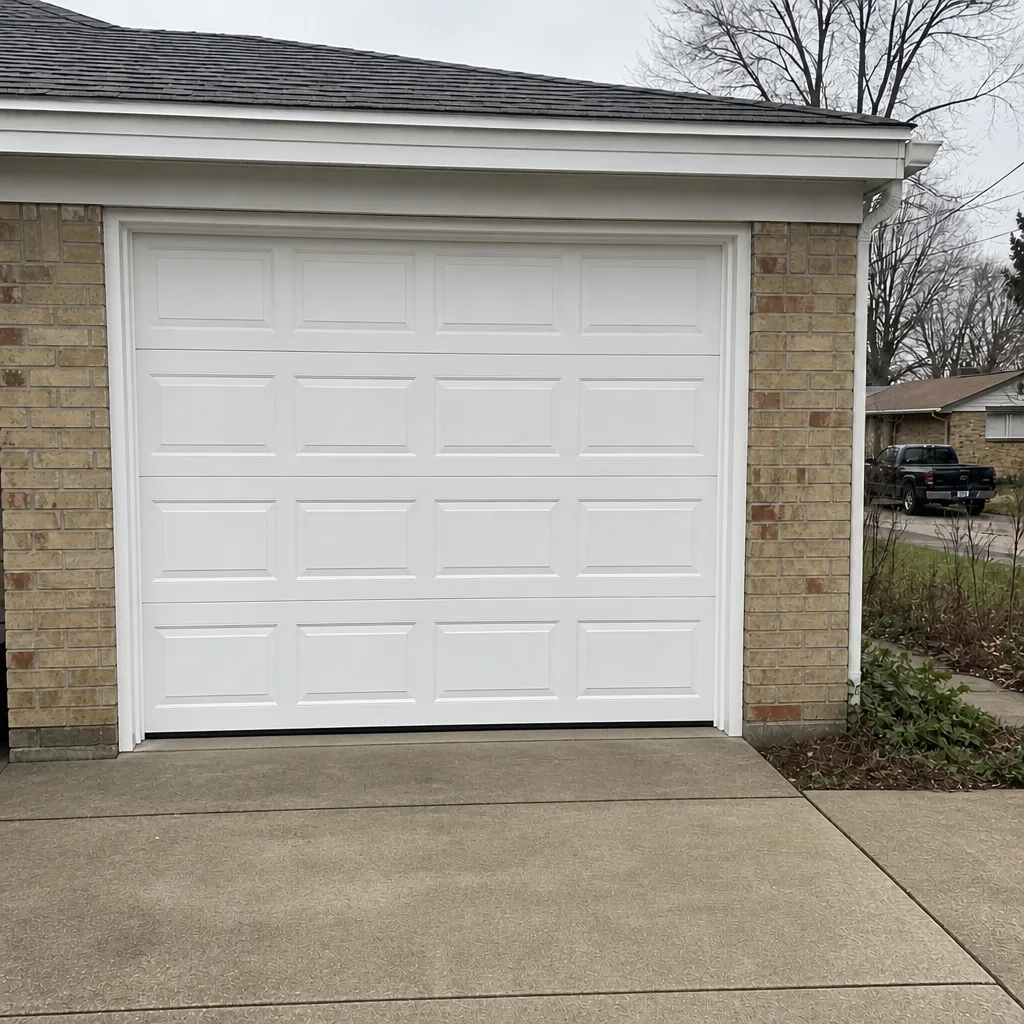
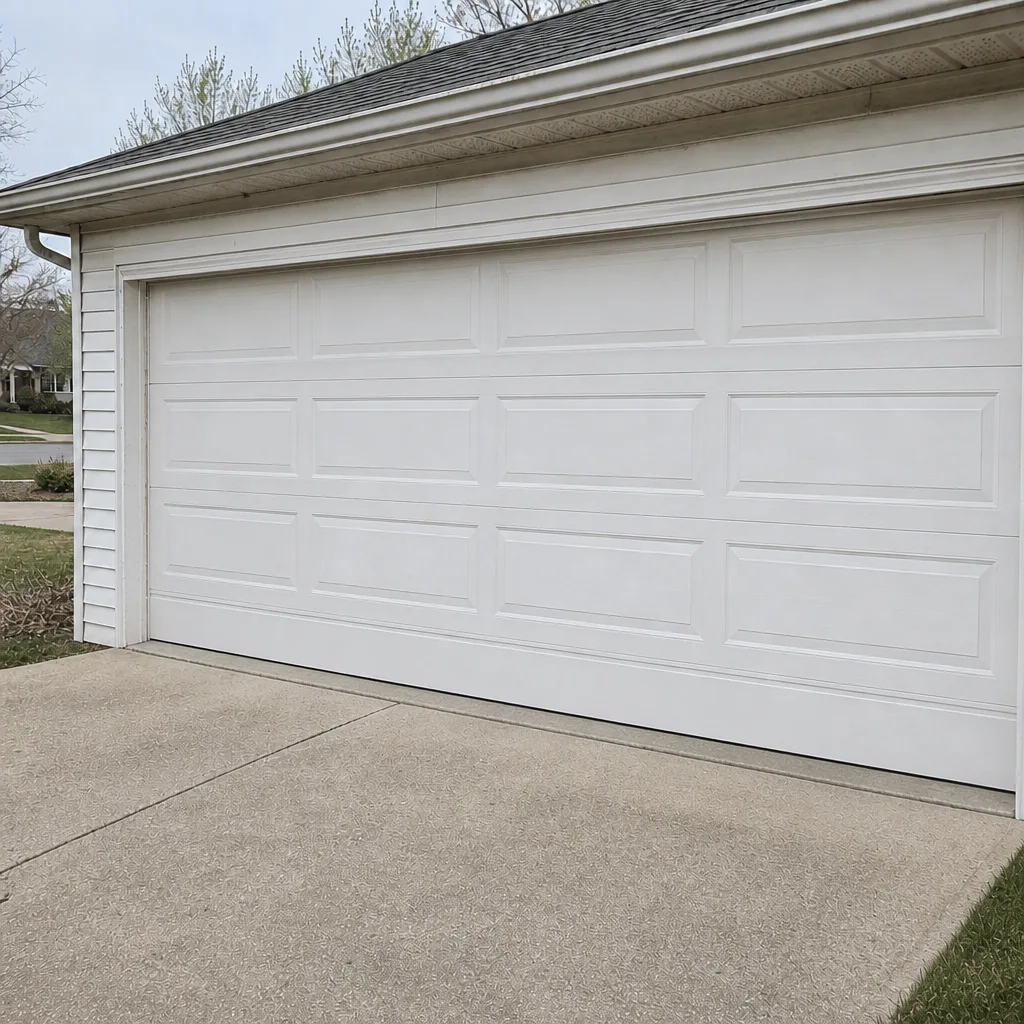
See the difference
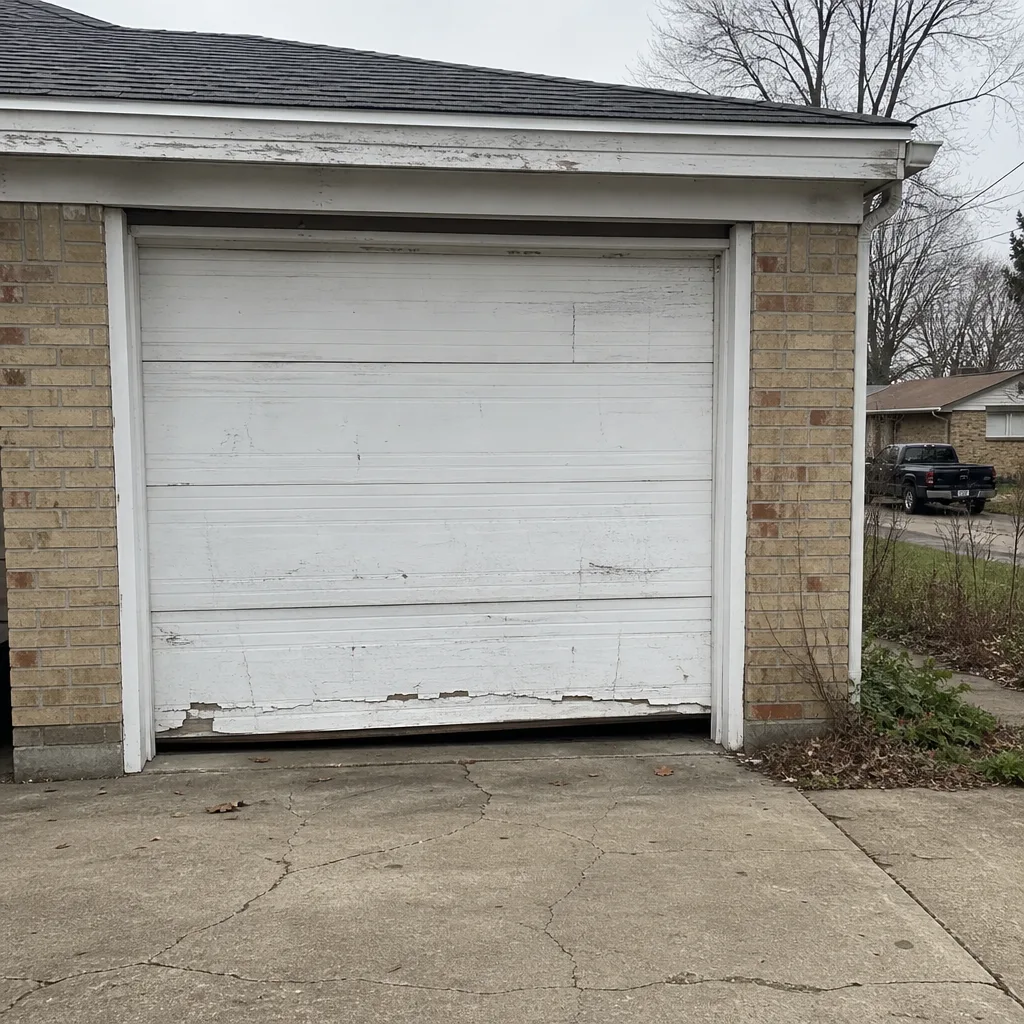 Before
 After
 Before
 After
 Before
 After
When to Call a Professional
Call a professional when the door makes a new sound that doesn’t go away, when it’s slower or heavier than it used to be, when a cable is frayed or a spring looks wrong, or when the opener runs and the door doesn’t move. Call immediately if the door has come off its track, if it slams or drops, if it reverses on its own, or if a loud bang came from the spring area. Anything involving a spring, a cable, or the opener’s electrical components is not a homeowner job, and the safety risk is real.
Garage Door Repair Nora offers free estimates in Nora. Call (833) 468-3650 to describe what you’re seeing; fast dispatch runs from 7am to 7pm, and the price is quoted and agreed before any work starts.
Frequently Asked Questions
A slow or heavier door is the most common early warning sign we hear about in Nora, and it usually points at spring tension or a dragging roller. It’s also the sign most often ignored, because the door still works. The second most common is a new grinding or squealing sound. Both are worth a call before they turn into a door that won’t lift.
Spring repair is priced per spring. A single torsion spring typically runs $180-$340, so a matched pair replaced together usually runs about twice that, $360-$680. Extension springs run a little less. The written estimate sets the final price, and the price is agreed before any work starts. Call (833) 468-3650 for an exact quote – estimates are free.
Yes. A door that won’t open, won’t close, or has a broken spring is treated as a same-day repair call, with fast dispatch from 7am to 7pm. Call (833) 468-3650 and describe the door’s behavior so we can carry the right parts. Keep the door closed if it’s safe to do so, and don’t cycle it to test it.
No, the written quote is the price. Once we’ve seen the door and confirmed the diagnosis, you get a written price for the work, and nothing starts until you agree to it. If we find a second problem while we’re in there, we show you and quote it separately; you’re never billed for work you didn’t approve.
The local pro who performs the work is licensed and insured as their state requires, and every technician we connect you with works on garage doors specifically, not across several trades. If you have a question about credentials before booking, ask when you call. Call (833) 468-3650 for an exact quote – estimates are free.
Yes, openers are more likely to fail on the first hard freeze of the year. Cold thickens the grease inside the opener and stiffens the door, so a part that’s already worn shows up sooner. If your opener is old and sluggish, a tune-up before the deep cold is cheaper than a failure mid-winter.
The Bottom Line
A garage door fails in stages, not all at once. Almost every dead door in a Nora garage was a loud door first, a slow door first, or a door with a gap at the floor for weeks before it quit. Reading the sounds, doing the 30-second visual walkthrough once a month, and sorting the signs into watch-and-monitor, call-today and stop-using gets you ahead of the failure. Springs and cables are professional-only, full stop. When you do call, describe the brand, the sound, and the behavior, and you’ll get the right parts and the right fix the first time.
If a warning sign has moved from “watch” to “call,” we’re here for it. Call (833) 468-3650 for a free estimate, and we’ll get a technician to your Nora garage with the right parts on hand.
Written by the team at Garage Door Repair Nora.